

Some business owners fall into the temptation of thinking that excellence is -in itself- a non-stop ticket to commercial success. However, to achieve good market positioning, it's not enough just to guarantee quality.
The equation is not that simple. Today more than ever, to reach consumers, it is necessary to design a commercial strategy based on two aspects: on the one hand, a deep understanding of our target audience and, on the other, obtaining specific information about what our competition promotes.
From this analysis, guidelines will emerge for setting prices, web communication style, social media presence, and something fundamental: the definition of a star product or service.
What does this mean?
There are products that shine on their own and allow for increasing market participation. Also called “flagship” -a term from naval vocabulary meaning flagship or capital ship- they are considered emblems of a brand such as, for example, Chanel Nº5 perfume, or -more recently- Coca Zero drink, which became the company's best-selling product.
These star products or services “may not be the ones that provide the most profitability, but they are the ones that allow us to achieve a high market share, those that you can offer quickly and effectively,” explained Agustin Nastasia, CEO of Grupo Vansur.
If we imagine what our customers' shopping experience is like (from digital communication strategies to the aesthetics and functionality of our online or physical store), we can see how our proposal is perceived.
Do you promote all products in the same way, giving them the same importance?
This is a guiding question that will allow us to know what the user's experience is like. Experience tells us that when there are no categories, lines, or packages (depending on the sector in question), the proposal becomes confusing.
Instead, promoting the positioning of a star product will allow us to prioritize and make ourselves known massively.
They literally function as the gateway to our circuit.
This action “allows us to build customer loyalty, since with the star product we get them to trust us so that we can then offer them -from a position of greater hierarchy- a range of accessory products or services that complete our proposal,” Nastasia highlighted.
This resource, known as “cross-selling”, consists of encouraging your customers to purchase products complementary to their main purchase. The objective of this is to increase the purchase ticket by motivating the acquisition of an additional good that, in turn, is related to what the customer wishes to buy.
In online sales, it is very clear when, below the selected product, a title indicates “other customers also chose” and a list of related products is displayed.
Another action associated with the definition of a star product is the technique “upselling” with which the aim is to offer the customer an improved version of the product they originally chose.
Something similar to what happens at the checkout of a hamburger or fast food chain when they offer to super-size your combo or add bacon to your fries.
Now then. It should not be forgotten that these resources arise because there was a star product that attracted and seduced potential customers. Hence its importance.
The Dollar Shave Club strategy
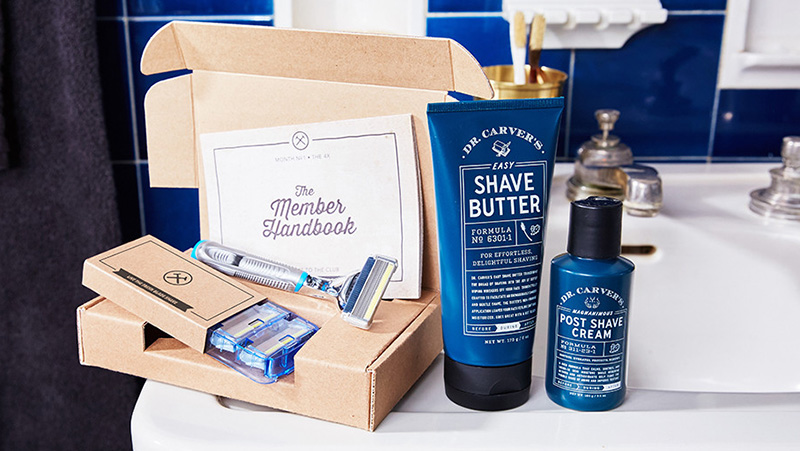
The management model of this American company, born in 2011, is worthy of analysis. Its founders detected that buying razor blades was an unhappy experience for users: they complained about the high cost of refills and the time they had to invest to acquire them.
Thus arose the idea of forming a club in which each member receives a monthly shipment of razor blade refills in exchange for a 1 dollar membership.
The shipping cost alone exceeded the dollar they charged their customers as membership, so at the beginning of the commercial relationship Dollar Shave Club was losing money at the cost of offering an excellent service.
This money they lost with their star product was compensated by the optional combos offered to the customer that expanded the value proposition. For example: A razor and a lotion for 22 dollars.
Campaign they managed to viralize on YouTube and Social Networks (worthy of analysis).
This is the secret to success of Dollar Shave Club, achieving an effective solution through belonging to a club that brings together like-minded members.
There is a strong brand identity that grew with the development of the initiative and took the founders to the next level: selling accessory products and transforming the club into a range of options for male grooming.
In 2016, Unilever announced the purchase of Dollar Shave Club for 1 billion dollars, nullifying the growth of a smart competitor that was strengthening its strategy year after year.
In summary, to compete it is necessary to have a creative strategy, define a star product, and keep in mind that this choice may have an expiration date.
It is important to be attentive to changes, to the behavior of demand and competition, and something that can sometimes be uncomfortable:
It doesn't matter to lose to win later.
Do you agree?